
Panda Hero Adventure
Uchiha GlobalAdventure
3.614.00 Reviews
- Version
- 1.2.5
- Installs
- 5.00M
- Age Rating
- Everyone
Screenshots
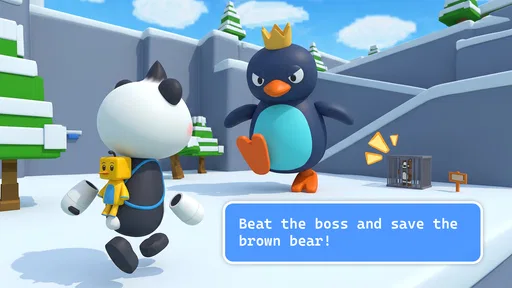
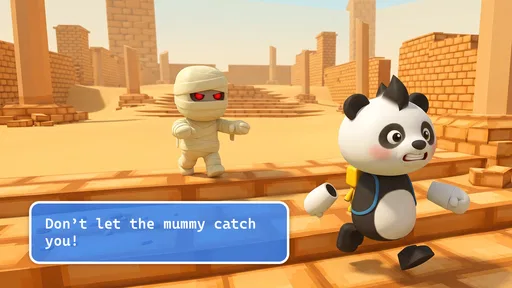
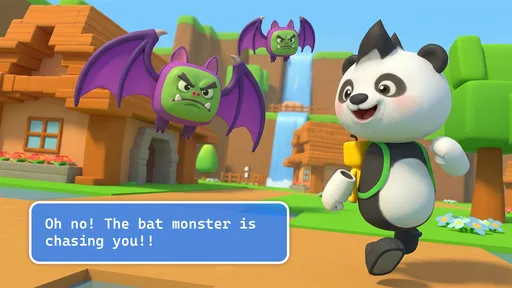
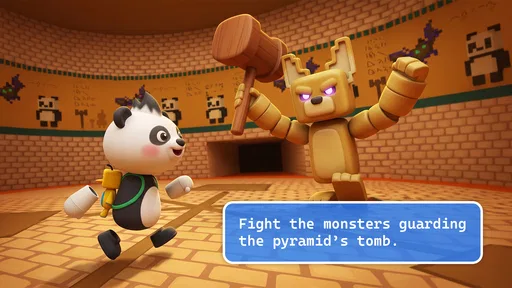
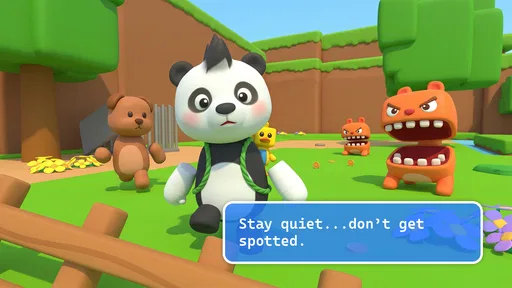
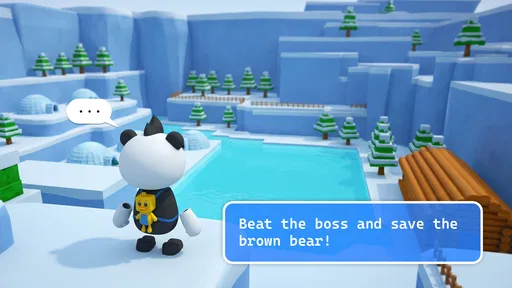
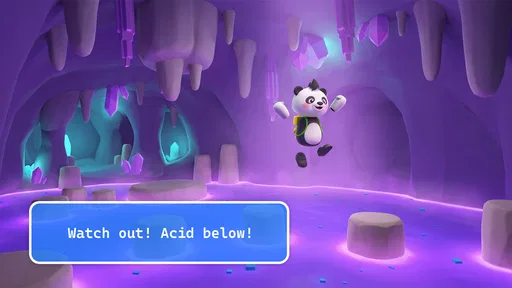
Our Review of Panda Hero Adventure
 Analysis by Appyee
I spent time with Panda Hero Adventure, a free adventure game from Uchiha Global that puts a cheerful panda at the center of a platforming journey. The basic idea is easy to understand: move, jump, dash, and fight your way through danger. That simplicity is part of its appeal, especially when I want a game I can open quickly without first learning a complicated rule set.
My overall impression is mixed but positive. The game has an approachable concept and a friendly tone that should suit younger players and casual Android users, yet its modest average rating of 3.6 suggests that the experience will not satisfy everyone equally. I found it most enjoyable in short sessions, where the direct controls and action-focused structure have room to work. Players looking for a deep adventure, a long story, or a highly polished platformer may find it too limited.
How the current version feels to play
The current release is version 1.2.5, and it presents itself as a straightforward mobile platformer rather than a large role-playing game. I approached each session with the expectation of quick movement and immediate action, not an expansive world filled with systems to manage. That expectation matters: the game makes more sense as a light, accessible adventure than as a replacement for a console-style campaign.
The panda gives the game a clear identity. Instead of placing an abstract character in a generic obstacle course, the design uses a friendly hero who makes the action feel less severe. Jumping and dashing create the rhythm, while fighting adds a reason to keep moving rather than simply crossing platforms. The combination is familiar, but it works well for a player who wants recognizable mechanics without a long tutorial.
I also think the age rating of Everyone is important when deciding who might enjoy it. Families can consider it for younger players who like animated heroes and simple action, while adults may appreciate it as a low-pressure distraction. That does not mean every child will find the controls effortless, though. Platforming still depends on timing, and a player who is new to action games may need a little practice before movement feels natural.
One useful way to play is to treat each attempt as a short exercise in timing rather than rushing toward the finish. I found that watching the space ahead, preparing the next jump, and using the dash deliberately made the game feel more controlled. Players who press buttons reactively may blame the game for missed landings, while players who slow down for a moment often get more consistent results.
The appeal of a simple panda platformer
The strongest part of the concept is its clarity. I do not have to remember a complicated inventory, compare a large collection of equipment, or follow several quest threads before enjoying the next few minutes. The panda, the platforms, and the enemies establish the purpose immediately. This makes the game suitable for a quick break during a commute, a waiting room, or a quiet moment at home.
There is also a useful contrast between movement and combat. Jumping gives the game its platforming identity, while fighting prevents the journey from becoming only a sequence of gaps. I enjoyed switching attention between positioning the hero safely and deciding when to engage. That balance is more interesting than simply holding a direction, although it depends heavily on how fair the timing feels in each situation.
My practical advice is to avoid treating every enemy as a target that must be confronted instantly. In a platformer, the safest route is often more important than the fastest attack. When I focused first on where the panda would land, I made fewer careless mistakes. This is a small change in approach, but it is one of the more useful lessons the game encourages through its movement-based design.
What the version and release history tell me
The game released on December 16, 2025, so version 1.2.5 places it in a relatively early stage of its life. I see that as a reason to judge the current build on what it already offers rather than on what a future update might bring. The version number shows that development has moved beyond the first launch build, but it does not by itself promise a completely transformed experience.
For someone who installed an earlier build, the sensible approach is to update and then replay a few familiar sections rather than assuming every difference will be obvious. Small changes in control response, pacing, or stability can affect a platformer more than a new menu would. Existing players should pay attention to whether movement feels more dependable and whether the game remains comfortable during short repeat sessions.
I would not make a purchase decision based on expectations of future content. The current appeal is already clear: a free, accessible adventure built around a panda hero. If that foundation sounds enjoyable, the game is worth trying now. If the only reason to install is the hope that it will eventually become a much larger or deeper title, waiting for clearly documented updates would be more sensible.
The developer, Uchiha Global, has chosen a concept that is easy to recognize and easy to explain. That is helpful for discovery, but it also raises the standard for execution. A simple platformer has nowhere to hide when controls feel imprecise or when repeated challenges become predictable. In my view, the next stage of development should focus less on adding complexity for its own sake and more on making the basic movement and combat consistently satisfying.
Who benefits most from the current experience
This is a good fit for someone who wants a colorful adventure game that can be understood quickly. It suits players who enjoy jumping across hazards, reacting to enemies, and learning through repeated attempts. The free price removes the biggest barrier to trying it, so curious players can make their own judgment without committing money first.
It is also a reasonable choice for families looking for an Everyone-rated game with a friendly central character. I would still recommend that younger players begin with an adult nearby if they are unfamiliar with platform games. The main challenge is not complicated strategy; it is coordinating movement and timing, which can be frustrating until the controls become familiar.
A realistic everyday use case is a ten-minute break between tasks. I can open the game, play a little, and stop without needing to remember a large story or prepare a long session. That makes it more convenient than many adventure games that demand extended attention. It is less suitable for a long evening when I want character development, exploration, or a strong narrative reason to continue.
The game has attracted over five million installs, which indicates that its simple premise reaches a broad mobile audience. Its roughly 2.9 thousand ratings provide a more varied signal than the install figure alone, and the 3.6 average tells me to keep expectations realistic. Popularity shows that many people are willing to try it; it does not guarantee that every player will enjoy the controls or pacing.
Where it sits beside other mobile adventures
Compared with endless runners, this game offers a more deliberate platforming feel because jumping, dashing, and fighting are central to the adventure rather than merely part of an automatic forward run. That makes it better for players who want some control over each obstacle. On the other hand, an endless runner may be more immediately replayable for someone who prefers chasing a high score with minimal learning.
Compared with large action-adventure games, Panda Hero Adventure is easier to pick up but far less ambitious in scope. A bigger alternative may provide richer exploration, upgrades, dialogue, and a more developed world. The trade-off is time and complexity. I would choose the panda game when I want direct action, and a larger adventure when I am prepared to invest in a longer, more involved experience.
It also differs from puzzle-platformers. The panda’s movement and combat create a more active pace, while a puzzle-focused game may reward careful planning over quick reactions. Players who dislike timing-based jumps should know that the friendly presentation does not remove the need for coordination. For them, a slower puzzle adventure could be a better match.
One of the game’s practical strengths is that it does not require the player to understand a broad genre vocabulary before starting. I can recommend it to a friend who says, “I want something simple with a character I can control,” without needing to explain a complicated progression system. The weakness is that experienced platformer fans may recognize the formula quickly and want more variety than the current presentation provides.
Small techniques that improve the experience
My first tip is to separate movement decisions from attack decisions. When I tried to jump and fight at the same moment without checking the landing area, I created avoidable problems. A better workflow is to identify the next safe position, make the jump, and then decide whether attacking is necessary. This approach is especially useful when several hazards appear close together.
My second tip is to use the dash as a planned movement tool instead of treating it as a panic button. Saving it for a difficult gap or a dangerous approach gives it more value than spending it immediately after every jump. Even without a complicated upgrade system, this kind of resource-minded thinking makes the action feel more deliberate and gives the player a clearer sense of control.
My third tip is to play in short learning cycles. Rather than repeating a difficult section mindlessly, I would change one behavior at a time: approach more slowly, jump earlier, or avoid an enemy instead of attacking. This makes it easier to understand whether a failure came from timing, positioning, or an overly aggressive choice. It also reduces the frustration that can come from repeating the same mistake.
A fourth useful habit is to adjust expectations based on the device and the player. The minimum operating system is Android 7.1, which makes the game accessible to users with older compatible phones and tablets. Still, compatibility does not automatically mean identical comfort on every screen. Players should give themselves time to find a grip and touch-control rhythm that keeps the panda’s movements predictable.
Remaining friction and reasons to skip it
The main limitation is that the simple design can become a weakness for players who need constant novelty. Jumping, dashing, and fighting are enough to support a pleasant session, but they may not be enough to sustain someone who expects a substantial adventure. If you usually choose games for their story, character progression, or deep customization, this is probably not the right first choice.
I also would not recommend it to someone who wants a completely relaxed game with no pressure from timing. Platforming naturally introduces mistakes, and combat adds another layer of attention. The Everyone rating describes the intended audience, but it does not mean the challenge will feel equally comfortable for every age or skill level.
The rating from users reinforces my cautious recommendation. An average of 3.6 is neither a warning to avoid the game entirely nor evidence of universal polish. I read it as a signal to try the free version personally and decide whether the controls suit me. The absence of a financial cost makes that test straightforward, but the time cost still matters if I am searching for a deeper adventure.
Another trade-off is focus. Because the game centers so strongly on its panda hero and basic platforming loop, its identity is clear, but that clarity may also make the experience feel narrow. I prefer that narrow focus to a cluttered game filled with systems that do not improve the action, yet players wanting a broad mobile journey may reasonably choose something more expansive.
What I would watch in future updates
For future development, I would watch how Uchiha Global improves the feel of the core controls. In a game built around jumping and dashing, even subtle improvements to responsiveness and consistency can matter more than decorative additions. I would also look for clearer variety in challenges, because new situations would help the panda’s journey remain interesting after the initial novelty fades.
I would pay attention to how existing players respond after moving to version 1.2.5. Their experience can reveal whether the game is becoming more stable and enjoyable over time or simply accumulating versions without addressing the reasons some players lose interest. A healthy update path should make the basic adventure more dependable before expanding its ambitions.
I would also like to see the developer preserve the game’s accessibility if it adds depth. More challenge does not need to mean more complicated menus or systems. The best direction would be to keep the panda, the readable action, and the quick-session convenience while giving returning players more meaningful reasons to continue.
For a new player, the decision is uncomplicated. Install it if you want a free adventure game with a friendly hero, direct platforming, and action that can fit into short breaks. Approach it with realistic expectations, practise the movement instead of rushing, and judge the controls during your first few sessions. Skip it if you need a rich story, extensive exploration, or a consistently relaxed pace.
My final view is that Panda Hero Adventure is an easy game to try and a more selective game to keep. I like its approachable panda-led concept and the way jumping, dashing, and fighting create a clear mobile routine. At the same time, I would not call it a complete substitute for a larger adventure platformer. Its best use is as a friendly, free pick-up-and-play game, not as an epic journey. For the right player, that focus is enough to make it worthwhile.
Verdict
Strengths of Panda Hero Adventure
- Simple controls make it easy for casual players to pick up.
- Bright cartoon visuals give the game a cheerful, family-friendly style.
- Short levels work well for quick gaming sessions.
- Collectibles and rewards add extra motivation to replay stages.
- Offline play is convenient when you have no internet connection.
Limitations of Panda Hero Adventure
- Some levels may feel repetitive after extended play.
- Difficulty balance can be uneven between stages.
- Ads may interrupt gameplay, depending on the version.
- Progression can feel slow without frequent play.
- Limited character variety may reduce long-term appeal.
Similar Picks in This Category
View All
Roblox
Roblox Corporation4.2

Pokémon GO
Niantic, Inc.3.5

Ninja warrior: legend of adven
TOH Games4.6

Ninja Arashi
Black Panther4.6

Eyes - The Horror Game
Fearless Games sp. j.4.5

Critical Action:Gun Strike Ops
FPS Shooter & Action Game4.3
Frequently Asked Questions
What is Panda Hero Adventure, and how does the gameplay work?
Panda Hero Adventure is a casual action-adventure game centered on a brave panda exploring colorful stages, overcoming obstacles, collecting useful items, and facing enemies. Gameplay generally combines simple controls with platforming, light combat, exploration, and level-based challenges. It is designed to be easy to understand, although later stages may require better timing, careful movement, and smarter use of available abilities.
Is Panda Hero Adventure free to download and play?
Panda Hero Adventure can typically be downloaded without an upfront purchase, but availability and pricing may vary depending on whether you use Android or iOS. Like many free mobile games, it may include optional in-app purchases, advertisements, or both. Before installing, check the store listing for current payment details, supported devices, and whether certain items, upgrades, or convenience features require additional spending.
Does Panda Hero Adventure require an internet connection?
The game may allow you to play some basic stages without a constant internet connection, which is useful when traveling or when mobile data is limited. However, online access can still be necessary for advertisements, rewards, updates, cloud saving, events, or purchases. Because requirements can change between versions, it is best to test the game offline after installation rather than assuming every feature will work without connectivity.
Is Panda Hero Adventure suitable for children?
Panda Hero Adventure uses a colorful, cartoon-style presentation that may appeal to younger players, and its basic controls are usually easy to learn. Nevertheless, parents should review the age rating, advertising content, privacy information, and in-app purchase settings before allowing children to play. Difficulty, enemy encounters, and online features can vary, so parental controls are recommended, particularly on shared family devices.
What should I check before downloading Panda Hero Adventure?
Before downloading Panda Hero Adventure, confirm that your phone or tablet meets the required operating-system version and has enough free storage for the installation and future updates. Also review the developer name, recent user reviews, permissions, privacy policy, and purchase information in the official app store. If your device has limited performance, checking graphics quality and reported crashes can help avoid a disappointing experience.
Play our best games!


